What building a chatbot to help Veterans taught me about the importance of control.
BACKGROUND
Unintended consequences.
The Department of Veteran's Affairs was facing a dire situation. They had a huge surge in the number of incoming claims for care and compensation following the release of a digital self-service platform for Veterans, but no means to process the claims in a timely manner that also produced optimal outcomes for customers.
ROLE
Research
Ideation
Leadership
Design direction
Stakeholder managment
Experience design
Experience strategy
User testing
Prototyping
DISCOVERY
Understand, empathise and validate.
Our team was brought in to apply human centred design to the problem to rapidly identify solutions. We devised an ambitious sprint schedule, over the course of 6 months to accelerate solving the issues. This included flying around the country to conduct research, synthesising insights, prototyping solutions and testing them all within a single sprint.
PROJECT LENGTH
6 months

IDEATION
Accessible, straight forward information.
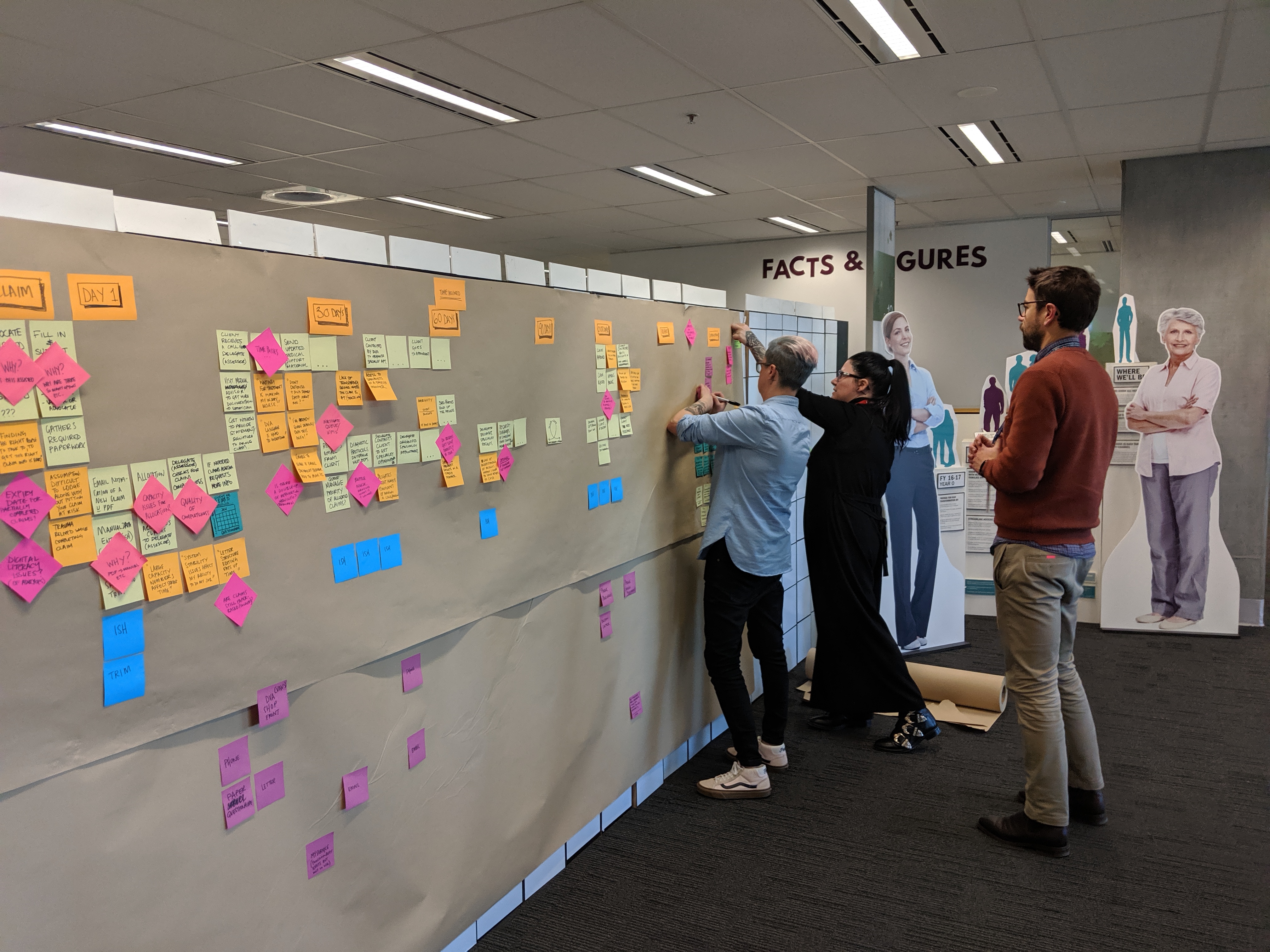
Following a 2 day intensive workshop, we came away with over 100 new ideas to fix the problems DVA was experiencing with their claims process.
A key issue we discovered was that Veteran's were unaware of what they were entitled to, how to make a claim or the overall claims process. We wanted to create a simple, accessible tool that any Veteran could use to determine what help was available based on their personal circumstances and understand in simple terms what they needed to do to prepare and lodge their claim.
PROTOTYPING
Build fast, learn fast.
We needed something familiar and easily accessible that would allow Veterans to input their circumstances and in return get tailored recommendations in relation to what they were eligible for and how to go about claiming.
A bot would meet our requirements and allow us to test our intended interactions out. We began work and built a full working prototype in two days to take out and test with real Veterans.
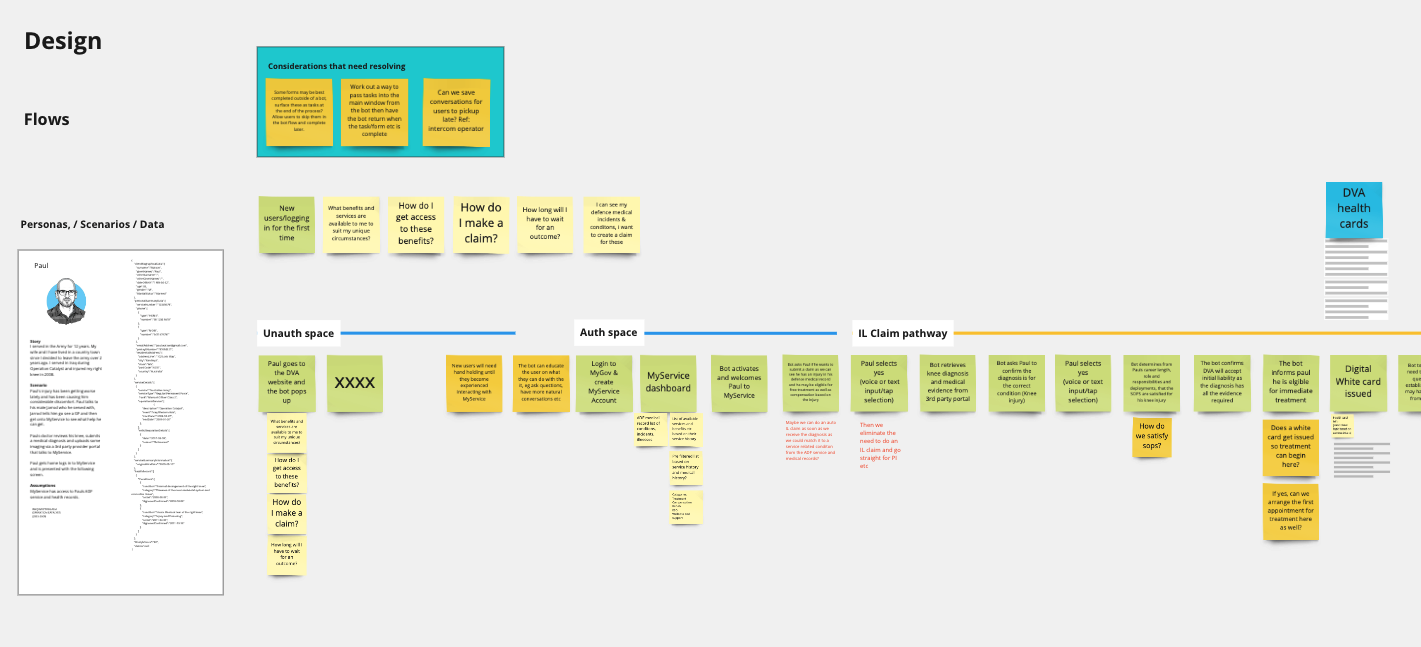
We started by mapping out the interactions based on a persona and scenario we created that would allow our test participants to experience the full capability of the prototype.
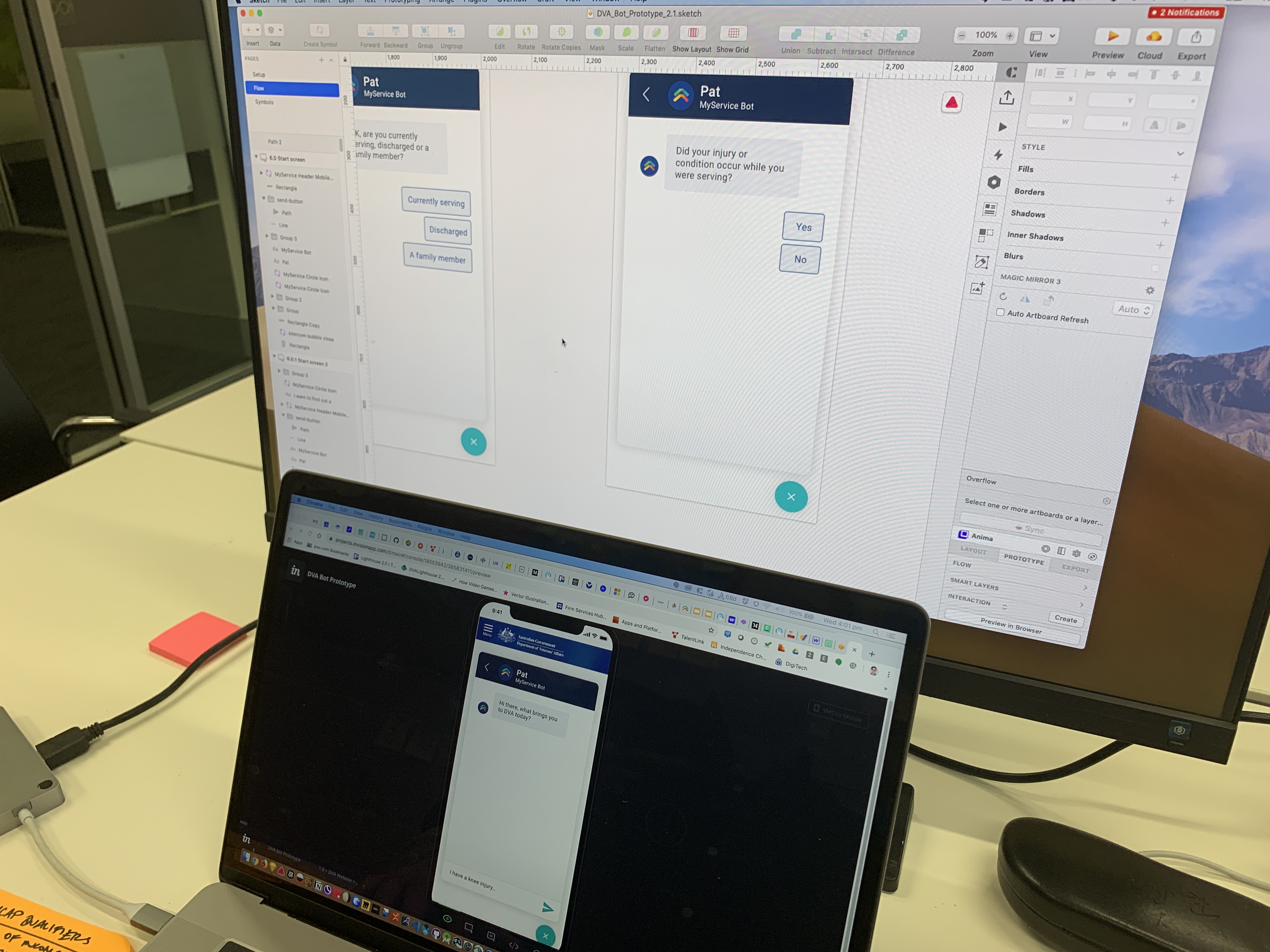
Concurrently, we wrote the dialog, created an interface and settled on using Google Assistant to build the first iteration of the prototype.
We considered using a form, but felt that the interaction would be too impersonal and static, we wanted something highly intelligent that would offer up personalised recommendations and information.

TESTING
Testing with users and learning. A lot.
We tested the prototype with 8 Veterans and learnt a lot in a short time.
While the information was highly relevant and helpful and the interaction between Veteran and bot was understandable, the pace and amount of information the bot was providing taught us how important it is for our target user's to be in control. In control of the process and in control of the pace of the interaction.
The bot was providing a huge amount of information, specifically tailored to the users circumstances. We discovered that information overload was detrimental to the experience and we would need to pull back a bit to allow the user time to absorb, understand and act on the information they were given.


LEARN AND ITERATE
Take things away to deliver more.
Based on our user testing findings, we iterated on the pace, type and amount of information the bot would deliver and implemented a way for users to come back to their conversation and pick up where they left off at a time that suited them.
Retesting proved to be a complete success. Veterans had control and ownership over the process, allowing them to consume and act on information at a pace they determined.

DELIVER
Handover and implement.
We handed over the prototype and all of our learnings to the internal delivery team at Department of Veterans Affairs to implement, it is slated for release for use by the Veteran population in 2021.